- Blog
- Turning a Required Withdrawal Into Real Impact: A Donor's…
Turning a Required Withdrawal Into Real Impact: A Donor's Guide to RMDs and QCDs
Key Takeaways
-
RMDs begin at 73 (or 75 if you were born in 1960 or later) and are taxed as ordinary income, raising your AGI and potentially your Medicare premiums.
-
A QCD lets anyone 70½ or older send up to $111,000 directly from an IRA to charity in 2026 — the gift counts toward your RMD, but never enters your taxable income.
-
It's an exclusion, not a deduction, so the benefit is the same whether or not you itemize — and it bypasses the new 0.5% AGI floor on charitable deductions.
-
The transfer must go directly to an operating public charity. No donor-advised funds, no benefits in return, and it must clear by December 31.
-
Consult with a financial advisor before taking any steps, and consider donating to On Point for College.
Required Minimum Distributions: The Obligation
The IRS has already decided that some of your retirement savings will leave your account this year. What it has not decided is where that money goes — and for donors who are already charitably inclined, that distinction is worth real money.
What the Rules Require
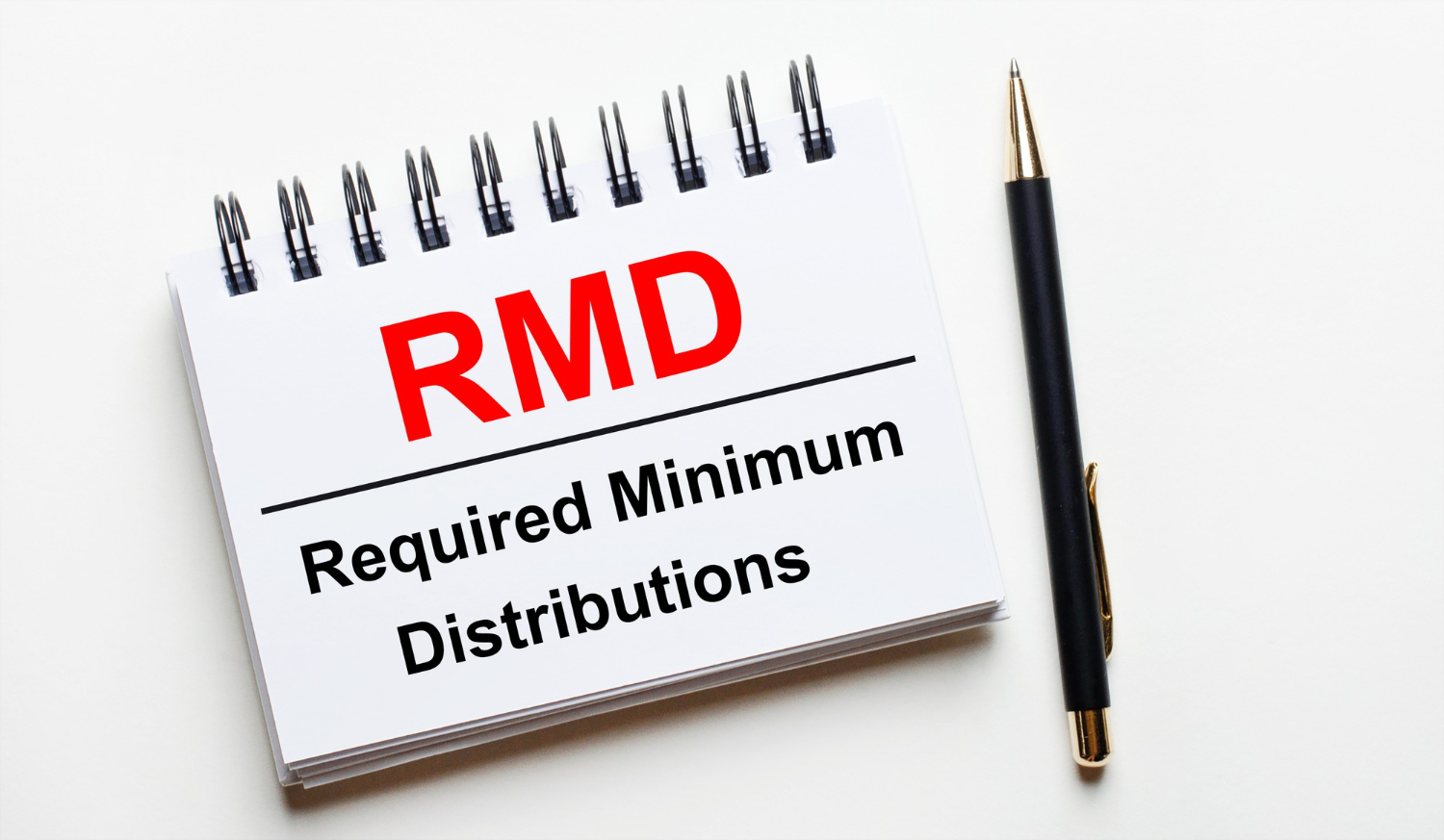
Once you reach age 73 — or 75, if you were born in 1960 or later — federal law requires you to withdraw a minimum amount each year from tax-deferred retirement accounts. This is known as a required minimum distribution, or RMD. Impacted accounts include:
-
Traditional individual retirement accounts (IRAs) and SIMPLE IRAs
-
Simplified employee pensions (SEPs)
-
Workplace plans such as 401(k), 403(b), and 457(b) plans. Roth IRAs are not subject to RMDs during the owner's lifetime.
The amount is calculated by dividing your prior year-end account balance by a life expectancy factor published by the IRS. Annual distributions are due by December 31, though you may delay your very first one until April 1 of the following year. Miss the deadline and the shortfall is subject to a 25% excise tax, reduced to 10% if you correct the error promptly.
Why RMDs Create a Tax Problem
RMDs are taxed as ordinary income, which raises your adjusted gross income (AGI). A higher AGI can push you into a higher bracket, increase your Medicare premiums, trigger phaseouts that limit other deductions, and cause more of your Social Security income to be taxed. For retirees who do not need the cash to live on, that is a forced tax event with no upside — unless you redirect it.
Qualified Charitable Distributions: The Opportunity
How a QCD Works
A qualified charitable distribution (QCD), sometimes called a charitable IRA rollover, allows individuals age 70½ and older to transfer funds directly from an IRA to a qualified 501(c)(3) public charity. The gift counts toward your RMD but is excluded from your taxable income.
For 2026, the limit is $111,000 per person, indexed annually for inflation. Married couples with separate IRAs can each give up to that amount. A one-time election of up to $55,000 may also be used to fund a charitable gift annuity or charitable remainder trust.
Why an Exclusion Beats a Deduction
A QCD is not a charitable deduction — it’s among the legal exclusions from gross income, and that’s what makes it powerful right now. Recent tax law raised the standard deduction, and most taxpayers no longer itemize at all. For those who do, charitable gifts are now deductible only to the extent that they exceed 0.5% of AGI, and itemized deductions are capped at a benefit of 35 cents on the dollar. Non-itemizers gained only a modest cash-gift deduction of $1,000 for single filers and $2,000 for joint filers.
A QCD sidesteps all of it. Because the money never enters your income, the benefit is identical whether you itemize or not.
Rules That Trip Donors Up
-
The transfer must be direct. If the money passes through your hands first, it becomes taxable income.
-
Not every charity qualifies. Donor-advised funds, private foundations, and supporting organizations are excluded.
-
You cannot receive anything in return — no gala tickets, no auction purchases, no benefits of value.
-
Active 401(k) plans are not eligible. Those assets generally must be rolled into an IRA first.
-
December 31 is firm. Custodians get backed up late in the year, so start early.
-
Keep your paperwork and confirm how your state taxes QCDs, as treatment varies.
Choosing Where the Gift Goes
Because a QCD must go to an operating public charity rather than a fund you control, it rewards donors who already know which missions they want to strengthen.
If you want to help the next generation of Americans, education and workforce development nonprofits like On Point for College are a natural fit. The organization not only helps first-generation and non-traditional students overcome the barriers to higher education, but also provides career guidance for both college students and job training graduates. And since RMDs recur every year, a QCD can quietly become a reliable multi-year commitment to vulnerable students who need someone in their corner.
How to Set Up a QCD
Setting up a QCD generally requires the following steps:
-
Contact your IRA custodian.
-
Request that the funds go directly to the organization, not to you.
-
Provide the nonprofit's legal name, EIN, mailing address, and a staff contact.
-
Tell the organization the gift is coming so it can be acknowledged properly.
-
Confirm the transfer is complete well before December 31.
Before You Act
This is general information, not tax advice. Your bracket, your Medicare situation, and your other assets all affect whether a QCD is your best move — in some years, donating appreciated securities may serve you better. Talk with your financial advisor or tax professional, and tell them charitable giving is part of your plan.
Maximize Your Giving Impact and Tax Savings Today With On Point
On Point helps traditional and nontraditional students in the Central New York region overcome the barriers to higher education and careers. We support our students from application through graduation and beyond, empowering them to fulfill their dreams and achieve their potential, which ultimately benefits both the individuals and our community.
Our Education Services and Career Services teams provide a range of supportive resources designed to help On Point students and graduates find the right college or university, training program, job, and “life” things in between. But we can’t do it without you. Consider investing in accessible higher education and job training programs for young people facing barriers to success by participating in our Legacy Giving program or our many other ways to give!